
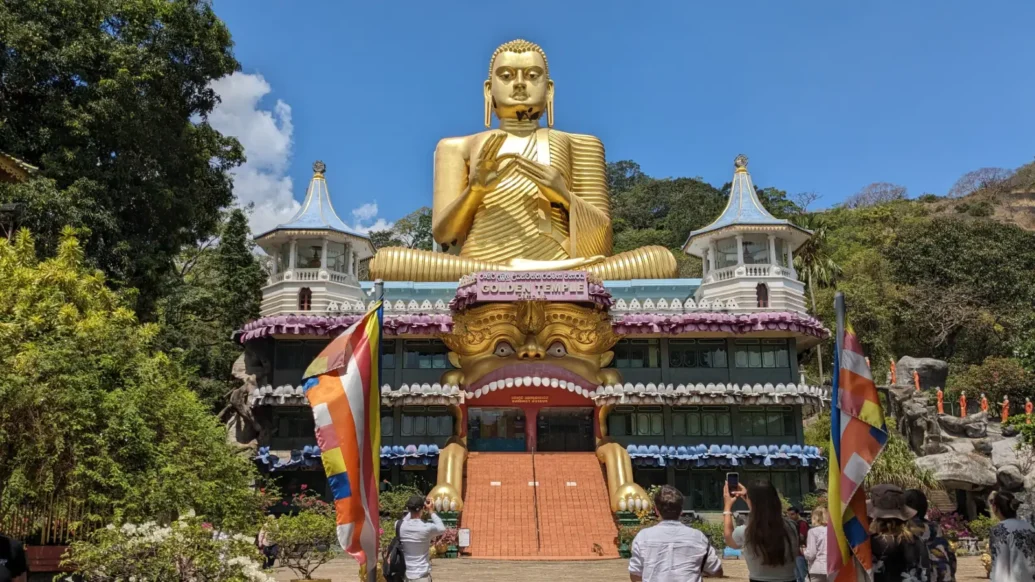
For many, where to spend their hard-earned summer break is a simple choice — anywhere with sand, sea, and sun. But what if you could have some of that wrapped up with a bit of adventure, culture, mountains and jungle thrown in for good measure? This is the dream combination we found on a recent trip to Sri Lanka.
It’s true that Sri Lanka hasn’t been a destination of choice in recent years; a civil war ended in 2009, leaving in its wake a not entirely unified population. Thankfully, things have been rather more stable recently, and with that and the Covid-19 pandemic behind them, Sri Lanka is welcoming visitors with open arms.
Sri Lanka is just over a quarter of the size of the United Kingdom, but it has such diverse landscapes to experience, from rice paddies and rainforests to tea estates and tempting golden beaches, that it may seem a little overwhelming. We spent some time exploring the island and picked out a few places we experienced that should be included in your Sri Lanka travel itinerary.
Colombo
British colonialists declared Colombo the capital of British Ceylon in 1815, and it has remained so ever since. It’s a 45-minute drive from Bandaranaike International Airport into the city, making it a great place to start your Sri Lankan adventure. We spent a couple of days in Colombo, staying at Cinnamon Lakeside Colombo , a five-star hotel located on the banks of Beira Lake, just minutes from the main attractions.

Jump on an open-topped bus for a Colombo City Tour, and you’ll get an excellent overview of the city’s history from a knowledgeable English-speaking tour guide. Wherever you look, there is hustle and bustle, colour and character.
There is also plenty of contrast, with the beautiful opulence of temples, mosques and statues juxtaposed with rundown shops and houses, all of which sit cheek-by-jowl with new, shiny skyscrapers. It’s a strange mish-mash in many ways, but it shows that Sri Lanka is looking towards its economic and social future rather than dwelling on its checkered past.

You’ll spot the Lotus Tower standing prominently on the skyline from so many places in the city. It’s the tallest self-supporting structure in South Asia, at 351.5 metres. Besides creating a stunning visual spectacle — particularly at night — the tower has many purposes. It acts as a radio and television transmission tower, has events spaces, a food court, a digital art museum, a revolving restaurant, and even six luxury suites, which you can stay in. With no apparent costs listed, though, I suspect you might need deep pockets for that one.

Head as high as you can in the incredibly speedy lift, and you’ll find the observation deck. From there, you can enjoy spectacular views of the mountains in the distance and the Indian Ocean. At around £16 per person, it isn’t a cheap visit compared to many other sites in the country, but if you love a city view, it’s worthwhile.
Kandy
Kandy is a major city in the island’s Central Province, known as the Last Kingdom of Sri Lanka until it fell to British colonial rule in 1815. It’s also the home of one of the most sacred sites in Buddhist culture — the Temple of the Tooth Relic.
Sri Lanka certainly isn’t short of temples of differing sizes and stature, but this one is very special. It is said that after Buddha’s death, bone fragments, including a tooth, were taken from the funeral pyre and disbursed by devoted Buddhists to temples around the world.

The tooth is stored in a golden casket behind railings that keep it hidden from public view most of the time. Worshippers pilgrimage to the temple to pray and leave floral offerings, waiting to glimpse the casket when the gates are opened during puja, allowing devotees to enter.
While the temple can be a little crowded with worshippers and tourists, it has a wonderfully serene atmosphere. Head outside, and there is what looks like a long wooden pagoda with beautifully carved supporting pillars. It’s the Audience Hall, initially built in 1783 for the Kandyan kings to hold court.

What was most interesting was the room full of different statues depicting Buddha from around the world. Each Buddhist culture has a slightly different take on the image, and seeing so many in one place was fascinating.
Galle
We spent much of our visit to Sri Lanka in more rural parts rather than in larger towns, but we ended our tour in Galle, the largest city in the southern province. Galle has a sizeable natural harbour and was the main port on the island for hundreds of years, part of the Spice Route for Sri Lanka’s most lucrative commodity — cinnamon.

During the Dutch colonial period in the 17th century, the city was heavily fortified, and Galle Fort was built. Today, it is a Unesco World Heritage Site with some fascinating history and even more stunning views, all of which are well worth exploring.
The Portuguese and Dutch heritage is evident throughout Galle, with different styles of architecture and European influences around every corner. The Dutch Reformed Church, built in 1755, is one of the oldest Protestant churches still in use in Sri Lanka today. The old Dutch warehouses, used to hold goods and even elephants bound for ships heading overseas, stand opposite the house where Queen Victoria would stay when she visited under colonial rule. All add character and historical colour to the city.

With such a prominent position on Sri Lanka’s early trade routes, it was no surprise when our guide told us that Galle was known as the first tourist destination in the country. By the 1860s, the city was home to seven large hotels. Today, it still attracts visitors with its charming cobbled streets, eclectic history, and boutique hotels.

With history oozing from every pore, gently rustling palm trees, and golden beaches, it has everything you need for a relaxing and culturally absorbing experience.
The Mountains
As you head inland, the lowland coastal regions give way to lush green mountains, which bring various activities to keep you entertained.
The most northerly point of our trip was Sigiriya. While it isn’t the most mountainous region, it sits at an elevation of between 1,000 and 1,500 metres and offers some exciting hikes with fabulous views of the surrounding countryside.

The two most popular hikes are Sigiriya Rock and Pidurangaia Rock. We opted for the slightly lesser-known Pidurangaia Rock, setting off from our nearby hotel well before 5am to watch the sunrise. There is an entrance fee, but it won’t break the bank at just 1,000 Sri Lankan rupees (about £2.60).
The hike itself is a little challenging, particularly if you’re not in the best shape, but it’s more of a relentless climb upward via steep steps and over tree roots and boulders in the near dark, which makes it difficult. Don’t let that put you off though. If you wear the right footwear — walking boots aren’t essential, but good trainers definitely are — and leave yourself enough time to take it at a relatively casual pace, you’ll make it to the top with no issues.
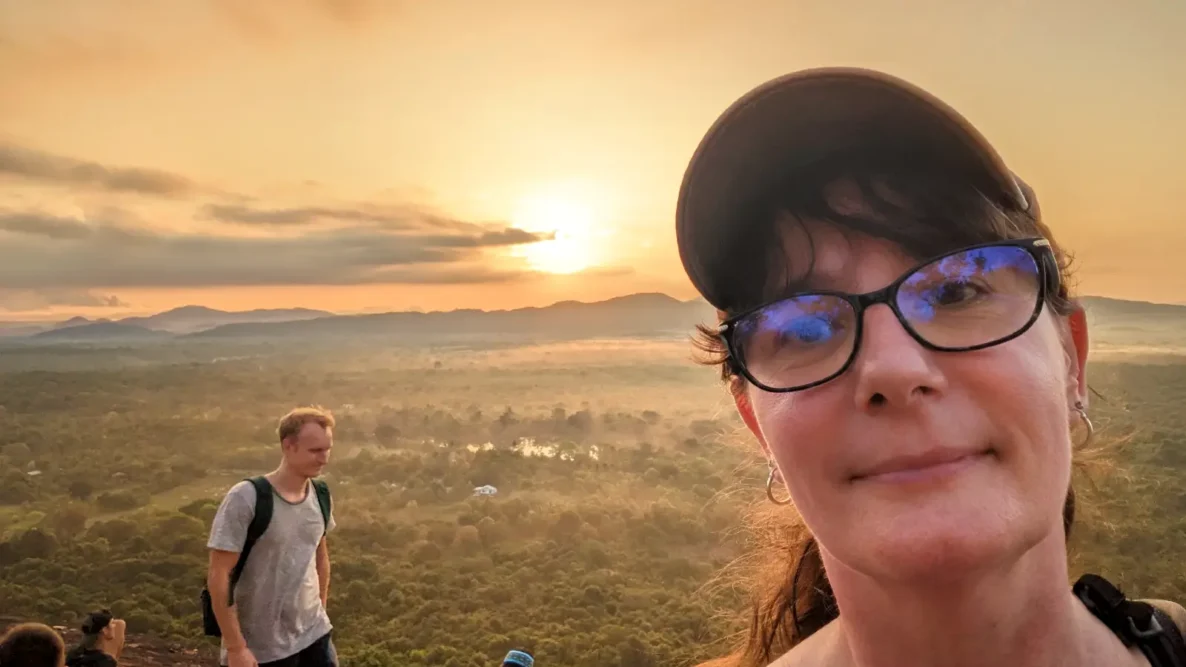
The final few metres are the most problematic, as you need to do some boulder scrambling and squeeze between rocks. Here, you may also encounter a queue as the narrow gap to the summit slows the flow of hikers. At the top, there is more than enough space for everyone to relax, sit, and wait for those first rays of sun to reach across the landscape as it stretches out into the distance.
Is it worth the early start and the climb? We’d say so, yes. As the sun rises, there is a wonderful sense of peace and calm, as well as stunning 360-degree views, including of Sigiriya rock.

Once you’ve had your fill of the scenery and serenity, you’ll find the process of squeezing between the rocks much easier as you head back down. The path is fully lit by the morning sun, so you can see the fabulous features you may have missed on the way up, such as the 12.5-metre-long reclining Buddha and the Pidurangala Vihara rock temple that sits to the side of the steps and footpath.
Nine Arch Bridge
No matter what country you visit, there are always those locations that people tend to gravitate toward. Nine Arch Bridge, near the town of Ella, is just one such location in Sri Lanka.

The bridge spans the valley between Ella and Demodara railway stations and was built during the British Colonial period. As construction on the bridge began, World War I broke out, so steel needed for its construction was diverted to Britain’s war effort, leaving engineers the challenge of completing the project using brick, stone, and cement.
They did a decent job of it as, over 100 years later, the 300-metre-long, 24-metre-high bridge still operates as an integral part of the rail network, while attracting thousands of visitors every year.

To get there, you can take a tuk-tuk from Ella. Alternatively, you could enjoy the bridge from a different angle by heading to the railway station at Badulla or Ella and jumping on the train for just a few pounds. To ensure you don’t miss the beautiful scenery during the journey, one of the carriages has been converted to an open-topped viewing platform, giving unrestricted views.
If you catch the train, you’ll still have the opportunity to enjoy the view from the bridge, as the train stops for around 10 minutes to allow tourists to jump off and snap a few pictures.

The journey between Badulla and Ella took us through beautiful countryside, with mountains and tea plantations rolling by. There was also plenty of opportunity for passengers to get that all-important Insta shot as they leaned out of the train door and had the wind whip through their hair. We decided against it, as the queue at just about every accessible door was not insignificant. Instead, we sat back and enjoyed the ride.
Hurulu Eco Park Elephant Safari
With 26 national parks covering around 9% of the country, there are plenty of options to see some native wildlife. While staying at Habarana Village by Cinnamon in the North Central Province, we took a jeep safari to the Hurulu Eco Park in search of its largest inhabitants, Sri Lankan elephants.

The open-topped safari jeep collected us from our hotel, and just a few minutes later, we were on the dirt track that led us deep into the park. It wasn’t long before we caught a glimpse of our first wild elephant, even if it was at a distance.
The elephant decided that the opposite direction looked much more interesting, so we moved on. Finally, we found a small group, including a mother and her calf happily feeding in the brush. Our jeep stopped a short distance from the group so we didn’t overcrowd them and turned off the engine. The elephants were unconcerned by us sitting quite close to them, gradually moving closer, munching grass with every step, and eventually crossing the track before disappearing into the tall grass.

With between 200 and 300 elephants roaming across the adjoining national parks, you’re very likely to see elephants during your three hours on safari, but November to June is the best season to see them. You could also be lucky enough to see wild buffalo or spotted deer, but sadly, we weren’t so fortunate.

Hurulu Eco Park Elephant Safari offers excellent value for money, with prices starting from around £48, making it a definite must for your Sri Lanka travel itinerary. It’s also a great family adventure, with kids able to see so much around them, thanks to the open-topped jeeps, which have lots of room to clamber around and see the wildlife for themselves in such a beautiful setting.
