
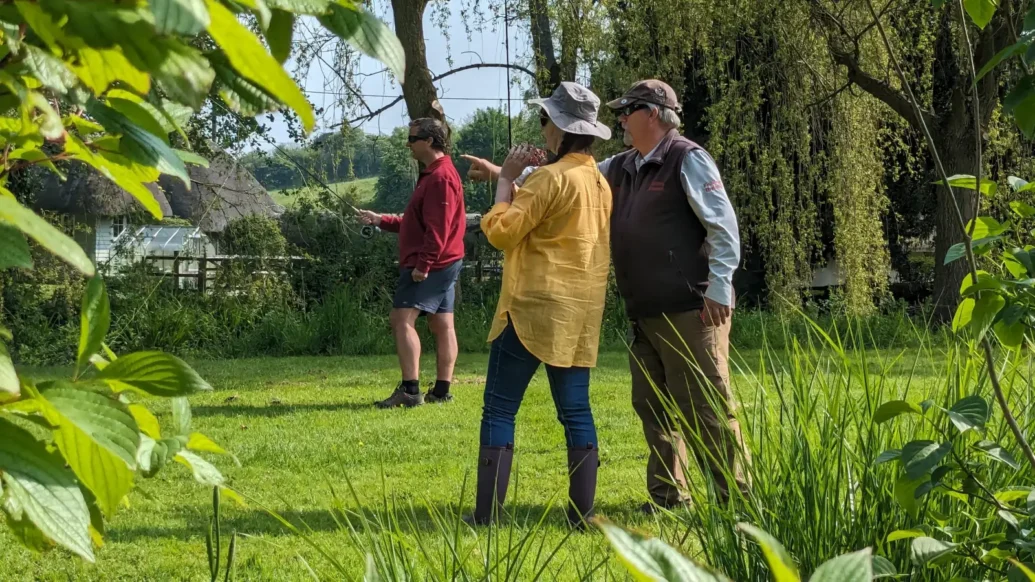
It always seemed to me that fishing was a sport that you either loved or hated. Even as a child, it never really held any appeal — it just seemed a rather slow way to spend a day. But not wishing to be closed-minded, when the idea of learning to fly fish with Fishing Breaks was suggested, I was up for the challenge.
We headed to the beautiful Test Valley in Hampshire, famed for its chalk streams and fabulous countryside, to spend the day with a qualified instructor learning the basics of this most skilled form of fishing.
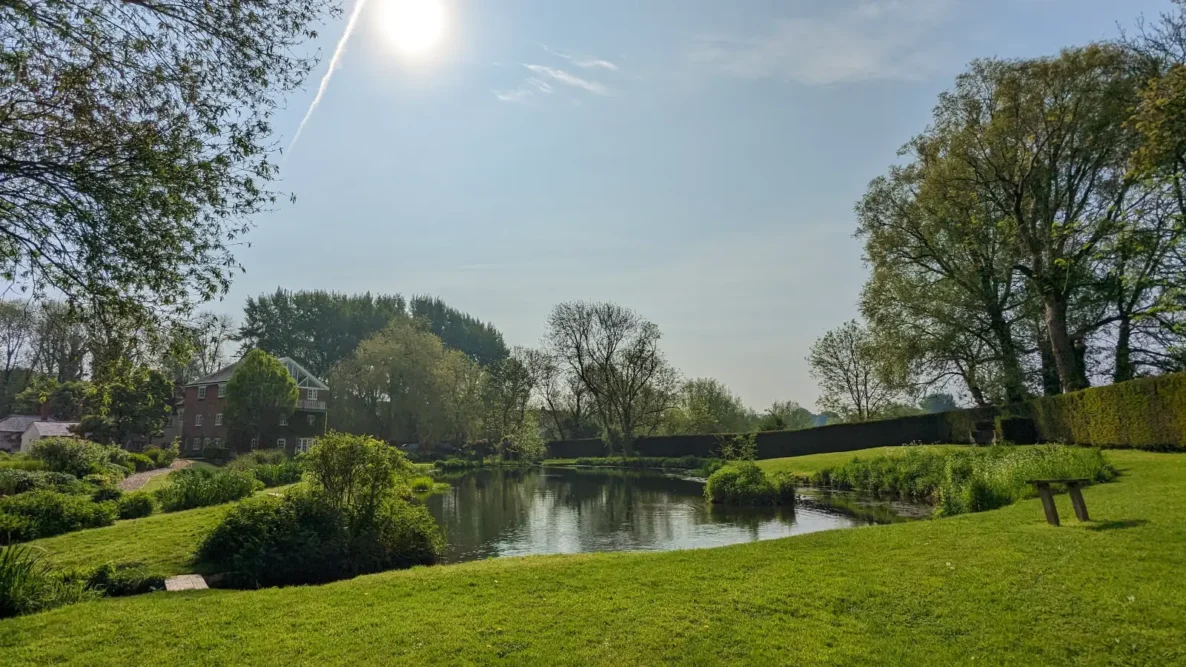
Fishing Breaks was started over thirty years ago by experienced angler Simon Cooper. His passion for the sport, and in particular the chalk streams of the UK, led him to want to share that knowledge and joy with fellow enthusiasts and would-be enthusiasts alike.
“I was born and brought up in Hampshire, which is sort of the fly fishing capital,” Cooper explained to Average Janes. “Just down the road, there’s a place called Mottisfont Abbey, where fly fishing, as we know it, was invented. This area is to fly fishing, what Saint Andrews is to golf, or Wimbledon is to tennis.
“I was brought up on the banks of a little chalk stream, and I just fell in love with fly fishing,” continued Cooper. “Then I grew up a bit and got a job — I was a bookmaker for 10 years in the late 80s, but gambling was dying on its feet, so I thought, “Let’s start a fly fishing business”. So, in 1990, I did. Back then, the only way you could go fishing on very private rivers was through someone you knew, so I got a portfolio of river owners who I had got to know over the years and persuaded them that I could make them money out of their rivers.

“I moved here 25 years ago, and the fishing school was already here. It was very famous; a chap called Dermot Wilson dug this pond in the 1960s and owned it until the 1980s. Then, the American company Orvis bought it, and then they moved out in the late 90s, and I bought it. It’s my home, my office, and my fly fishing school.”
From April to October, a variety of courses are available for groups and individuals. The one-day foundation course we enrolled in is based at The Mill in Nether Wallop. As a complete novice, I was extremely grateful to learn that the class size was limited to just four people, and we were fishing on a private lake on the mill’s grounds.
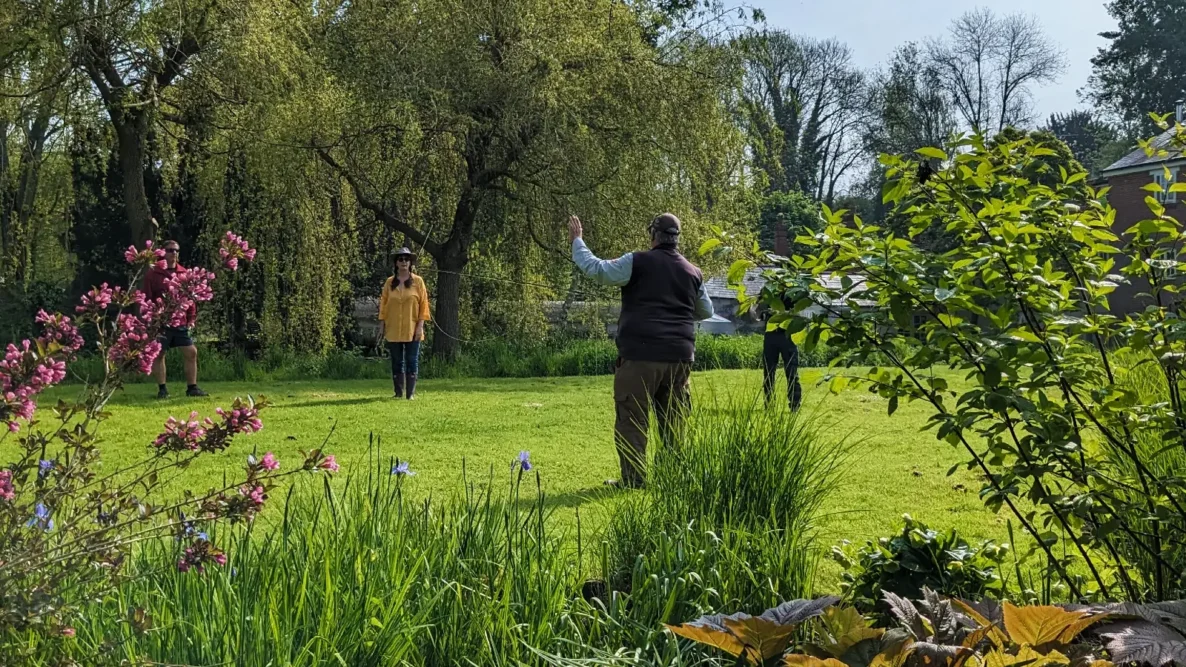
We arrived ready for our 9.30 am start, not knowing quite how the day would go, but were put immediately at ease by our instructor, Steve, who assured us that by the end of the day, we would have caught at least one fish.
After being issued our rod and reel, Steve talked us through how to put it together and thread the line, which he made seem very simple. The first thing to learn was how to cast. Rather than taking us straight to the lake, we retreated to the lawn to practise the motion without a fly and hook attached. Instead, we had a coloured thread attached in place of a hook so we could see where each cast sent the line and learn from every attempt.

It was much trickier than Steve made it look, but with his patience and reassurance, we all pretty much got the idea. I found it tricky to cast the line without using my wrist — the action should come from the elbow — so Steve strapped the rod to my wrist using a teaching aid he usually reserves for children’s groups. It did the trick, and I was soon back on course.
The morning melted away much more quickly than I had expected, and we headed to the thatched cabin, equipped with a small kitchen area, a large fridge stocked with cold drinks, and comfy chairs inside and outside, for a well-earned break.
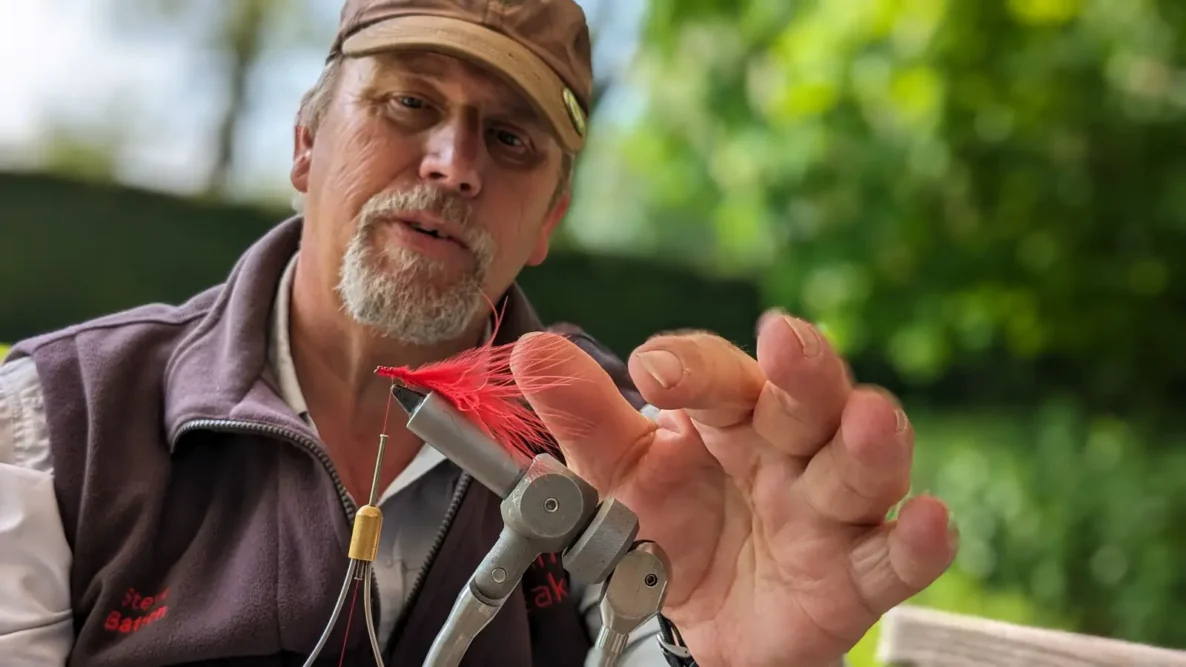
As packed lunches were eaten — food isn’t provided, so BYO — Steve demonstrated the intricate art of tying a fly, which was fascinating to watch. He talked us through the different materials used to make different types of fly, and when each type might be most effective. His enthusiasm for the sport was infectious, and I was itching to get to the lake and put my newly acquired skills to the test.
After a slightly dodgy start — it seems that patience and timing were not my strong suits — I finally cast the line out into the lake and began retrieving the line. It didn’t take long for the fish to start biting, and I did get a few nibbles before eventually getting a good bite.
Sadly, that was one of several that got away, taking my fly with it. Undeterred, I tried, tried, and tried again. One of our group had the lion’s share of the luck, or perhaps it was skill, with fish seeming to queue up to throw themselves onto his hook.
As we neared the end of our day and my shoulders started rebelling against this alien form of exercise, a stubborn spark of determination refused to be extinguished. Just as the last rays of sunlight dipped below the tree line, a powerful tug woke me from my thoughts drifting towards this evening’s dinner and back to the thrashing, shimmering blur of water in front of me.

Slowly, steadily, I gained the upper hand. Woman versus trout. It might not be an entirely fair fight, but the trout were winning 3–0 so far, and I wanted to at least get something on the scoreboard in my head. Tiring the fish out swung the advantage in my favour, and eventually, I was able to drag my exhausted catch onto the shore.
Just 24 hours earlier, I’d been entirely nonplussed about fly fishing, but I was elated by my achievement. The moments of frustration, snagged weeds, bank catching, and stolen flies all became worth it. It wasn’t just a fish to me; it was a hard-won victory against the odds, a testament to perseverance.
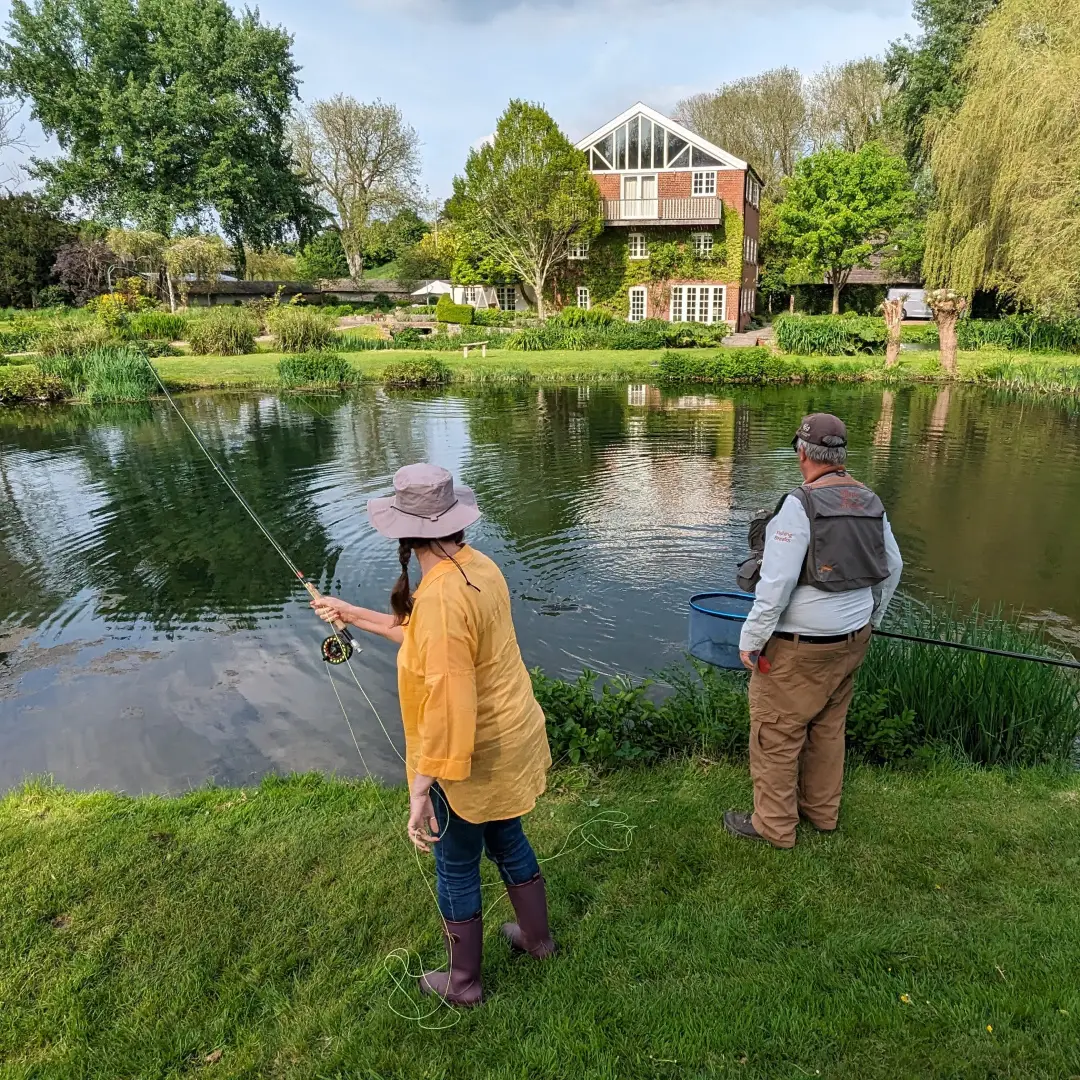


I’m not sure fly fishing will become my new hobby, but I can finally see the appeal. I have to concede that the peace and serenity of this often solitary sport, spending time surrounded by nature, and honing skills with each cast have a certain beauty to them.
It would take a few more sessions under Steve’s expert eye to get me to any real successful standard, and Fishing Breaks is likely to be around to support me, given owner Simon’s enthusiasm: “This is my 35th season,” says Cooper, “and I can honestly say I haven’t yet woken up on any morning thinking, ‘I’ve had enough of this’.”
Perhaps I should quit while I’m ahead. Still, never say never, right?
What: Fishing Breaks One Day Foundation Course
How much: £215
Web: FishingBreaks.co.uk
More info: The Fishing Breaks One Day Foundation Course is ideal for beginners aged 18 and over. Tackle, flies, liquid refreshments, and car parking are included. Lunch and snacks are not provided. Tuition is in small groups of up to four people.
